
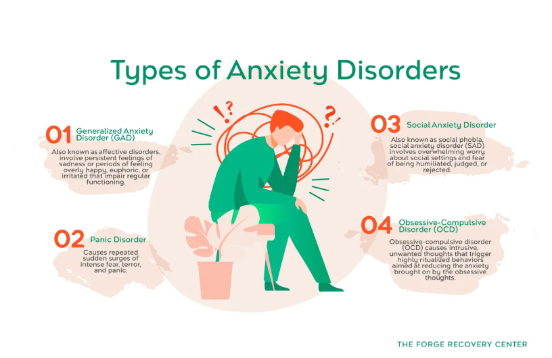
Anxiety disorders are a group of conditions marked by persistent worry, fear, and behavior changes that interfere with everyday life. [1] They are common in adults and often occur alongside other mental health concerns, so recognizing symptom patterns is an important step toward accurate diagnosis and effective care.
On this page, you’ll see the main types of anxiety disorders, how sudden panic differs from ongoing anxiety, and an overview of evidence-based treatments, including CBT, exposure therapy, DBT, EMDR, and medication management, along with program levels such as PHP, IOP, and OP.
If you’re in Massachusetts and looking for anxiety treatment and care, Grand Rising Behavioral Health offers discreet, evidence-based services for adults at our Norwood office and through secure virtual visits.
Our admissions team is available year-round to discuss next steps. Below, you’ll find clear definitions, symptom checklists, practical coping tips, and treatment pathways to help you know when to seek a professional evaluation and what effective care can look like.
Anxiety disorders include several distinct diagnoses that share persistent fear or worry but differ in triggers, duration, and behavioral responses. Recognizing the main types, Generalized Anxiety Disorder, Panic Disorder, Social Anxiety Disorder, Specific Phobias, Agoraphobia, Separation Anxiety (in adults), and Selective Mutism [2] helps match symptoms with effective treatments and appropriate levels of care.
The table below highlights key symptoms and typical presentations so you can compare how each disorder may show up in daily life.
These differences help explain why treatment should be tailored and when higher-intensity care may be appropriate. For people who need structured or intensive treatment, Grand Rising Behavioral Health offers programs and therapy options matched to symptom severity and functional needs.
Generalized Anxiety Disorder (GAD) is marked by persistent, excessive worry across several areas of life, work, health, and finances that is hard to control and typically lasts for months.
It involves a tendency to overestimate threat and a chronic activation of the body's stress response, producing both mental symptoms (rumination, indecision) and physical symptoms (muscle tension, sleep problems). [3] Clinically, diagnosis usually requires symptoms to be present for at least six months with noticeable impact on daily functioning, and many clinicians refer to DSM-5 criteria when assessing GAD. [4]
Effective treatments include cognitive behavioral therapy (CBT) to change worry patterns, medication management when clinically appropriate, and lifestyle interventions that improve sleep and stress resilience. Early care can restore functioning and reduce the chance of developing more severe problems.
A panic attack is a short-lived episode of intense fear with sudden physical symptoms, racing heart, sweating, trembling, shortness of breath, or a sense of losing control, typically peaking within minutes. [5]
Panic disorder is diagnosed when these attacks happen repeatedly and are followed by ongoing worry about future attacks or changes in behavior (like avoiding places where an attack occurred). [6] Panic disorder often brings anticipatory anxiety and avoidance that can generalize across situations, sometimes contributing to agoraphobic behavior.
Treatment addresses immediate symptoms and the underlying fear circuitry, using CBT strategies such as interoceptive exposure, short-term medications (such as SSRIs or, in select cases, brief and carefully monitored benzodiazepine use) for stabilization, and higher levels of care (IOP or PHP) when avoidance is severe. Structured care pathways help reduce relapse risk and restore daily functioning when panic symptoms are frequent or disabling.
Social Anxiety Disorder centers on a strong fear of being judged or embarrassed in social or performance situations, which leads to avoidance or intense distress that can disrupt school, work, and relationships.
Unlike the broad worry of GAD or the sudden episodes of panic disorder, social anxiety is situation-specific and tied to fears about social evaluation. Evidence-based treatments include exposure-based CBT tailored to social fears, social skills training, and group therapy that provides corrective social experiences.
For moderate-to-severe cases, combining medication with psychotherapy can speed progress, and group-based programs or IOP formats can accelerate skill-building.
These treatments are available in outpatient care and, when needed, in higher-intensity PHP or IOP programs. Grand Rising Behavioral Health provides individualized CBT, group skills training, medication coordination, and virtual group options to tailor care to each person’s needs.
Social Anxiety Disorder often presents as intense anticipatory worry, avoidance of social situations, blushing or shaking, and trouble speaking in groups. [7] Causes typically involve a mix of genetic susceptibility, early experiences, and learned avoidance that reinforces fear.
If social withdrawal continues, comorbid issues such as depression or substance use can emerge, increasing functional impairment. Early recognition and referral for therapy or medication can prevent long-term difficulties and improve social functioning.
Treatment focuses on exposure-based CBT tailored to performance and interaction fears, often combined with social skills training to build confidence and conversational skills.
Group therapy offers in-vivo practice and peer support, while medication can, when appropriate, reduce worrying and physical symptoms enough to allow productive therapy participation. For people with significant impairment, program-based care such as IOP or PHP provides concentrated, structured therapy blocks and targeted social skills groups that speed recovery.
At Grand Rising Behavioral Health, we integrate CBT, group work, and medication management across outpatient and program levels to create clear, individualized treatment pathways.
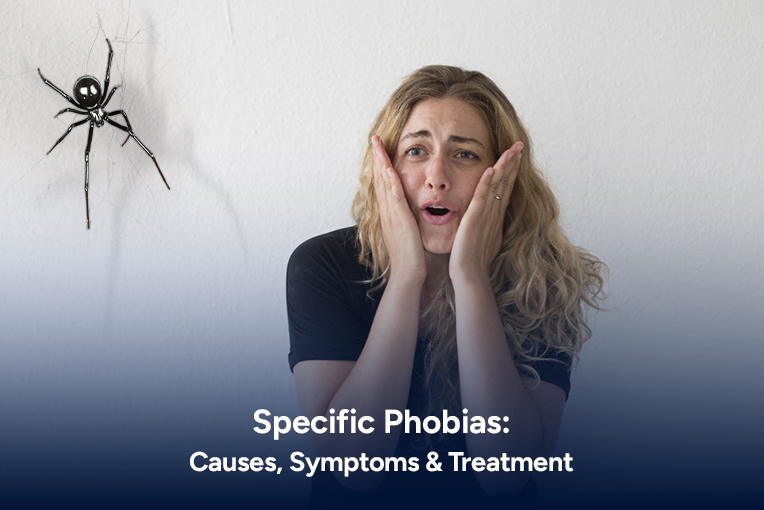
Specific phobias are intense, focused fears of particular objects or situations that trigger an immediate anxiety response and avoidance that is out of proportion to the actual danger. A first-line treatment is exposure therapy: systematic, controlled contact with the feared stimulus to build habituation and revise threat beliefs. [8]
Approaches include imaginal exposure, in vivo exposure, and technology-assisted methods (like virtual reality) for situations such as flying or medical procedures. With guided exposure, many people see meaningful improvement in weeks to months and can return to normal activities more quickly than they expect.
With therapist guidance, exposure typically can lead to measurable improvement over weeks to months. CBT techniques that address catastrophic thinking help maintain those gains.
Common specific phobias include animals (spiders, dogs), natural environment fears (heights, storms), situational fears (flying, elevators), and blood-injection-injury fears. [9]
Many begin in childhood or adolescence and persist if avoidance prevents corrective learning. While prevalence varies by category, specific phobias overall are among the most frequent anxiety diagnoses and warrant treatment when they cause distress or limit daily life.
Exposure therapy reduces fear through repeated, controlled encounters with the feared stimulus, which allows physiological arousal to decrease and threat beliefs to update. [10]
Therapists create graded exposure hierarchies that match the person’s tolerance, monitor safety and distress, and pair exposures with cognitive work to consolidate new learning. Grand Rising Behavioral Health offers exposure-based interventions in outpatient care and can increase intensity through IOP when avoidance is more entrenched.
Agoraphobia involves anxiety about situations where escape might be difficult, or help might not be available, often leading to avoidance of public places, transportation, or leaving home. [11] It frequently develops alongside panic disorder, where fear of future attacks drives avoidance learning, and can become disabling without timely treatment.
Effective care combines CBT with graded real-world exposure, medication when clinically indicated, and program-based supports (PHP, IOP, OP) to support safe re-engagement in daily life.
Matching program intensity to a person’s needs helps clinicians recommend a safe, effective pathway for gradual re-engagement with public spaces and daily routines.
Agoraphobia commonly develops after repeated panic attacks and the resulting avoidance that generalizes across settings, reinforced by anxiety sensitivity and life stress.
Risk factors include early panic symptoms, traumatic events, and a temperament marked by high behavioral inhibition. Signs that higher-level care may be needed include long-term homebound behavior, inability to work, or a clear decline in personal care; in such cases, PHP or IOP can provide frequent exposure practice and coordinated medication management.
Grand Rising Behavioral Health treats adults with agoraphobia using evidence-based approaches, CBT with graded exposure, DBT skills for distress tolerance, EMDR when trauma contributes, and medication management as clinically indicated.
Our Norwood, MA facility emphasizes a welcoming, hospitality-first approach to care, and our virtual options make treatment accessible across Massachusetts for people easing in from home-based exposure.
Program pathways range from outpatient therapy for milder cases to stepped-up IOP or PHP for those who need more supervised practice; our admissions team is available year-round to discuss program fit and insurance considerations (we focus on PPO and private-pay).
Left untreated, anxiety disorders can lead to chronic stress, depression, substance misuse, and ongoing impairment at work, school, or in relationships. They can also contribute to physical health problems like high blood pressure and gastrointestinal issues. Early intervention can reduce these risks and improve long-term outcomes, so reaching out for help sooner is important.
Small, consistent lifestyle changes can make a meaningful difference. Regular exercise, balanced nutrition, and good sleep support mental health. Mindfulness practices such as meditation or breathing exercises improve emotional regulation, and cutting back on caffeine or alcohol can reduce triggers. These steps work best alongside therapy or medical care when needed.
Medication can be an effective part of treatment, especially for moderate to severe symptoms. Common options include SSRIs, short-term use of benzodiazepines in select, carefully monitored cases, and beta-blockers for performance-related anxiety. Medications are often most helpful when combined with therapy, such as CBT, which targets the thought patterns and behaviors that maintain anxiety.
Supportive loved ones can make a meaningful difference. Listening without judgment, validating feelings, and offering practical help, for example, driving to appointments or joining calming activities, can ease the burden. Learning about anxiety and encouraging professional help when needed also empowers family and friends to offer informed support.
Disclaimer
The information in this article is meant for educational and informational purposes only. It should not replace professional medical or mental-health advice, diagnosis, or treatment. Grand Rising Behavioral Health offers evidence-based outpatient programs (including PHP, IOP, and OP), but individual needs and treatment timelines may vary.
If you or a loved one is dealing with mental health concerns, please reach out to Grand Rising Behavioral Health’s admissions team for a confidential consultation. Our licensed clinicians can evaluate your needs and help you start a safe, personalized care plan without delay.
1. https://www.nimh.nih.gov/health/topics/anxiety-disorders
2. https://www.nimh.nih.gov/health/topics/anxiety-disorders
3. https://www.nimh.nih.gov/health/publications/generalized-anxiety-disorder-gad
4. https://www.nimh.nih.gov/health/statistics/generalized-anxiety-disorder
5.https://www.mayoclinic.org/diseases-conditions/panic-attacks/symptoms-causes/syc-20376021
6. https://www.nimh.nih.gov/health/publications/panic-disorder-when-fear-overwhelms
7. https://www.nimh.nih.gov/health/publications/social-anxiety-disorder-more-than-just-shyness
8. https://emedicine.medscape.com/article/288016-treatment?form=fpf
9. https://www.ncbi.nlm.nih.gov/books/NBK499923/
10. https://www.apa.org/ptsd-guideline/patients-and-families/exposure-therapy
11.https://www.mayoclinic.org/diseases-conditions/agoraphobia/symptoms-causes/syc-20355987
We are a safe space – a haven for exceptional individuals to receive discreet, personalized, in-person treatment and care.





Accredited by The Joint Commission